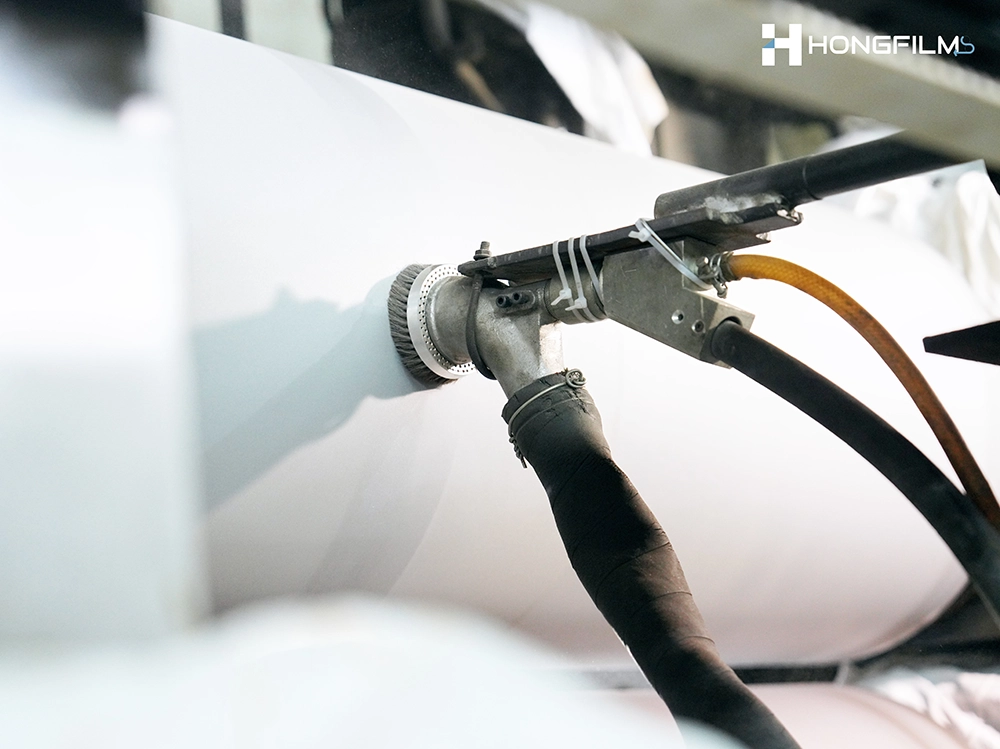
Roller sandblasting helps restore a controlled surface texture that can be transferred consistently onto PVC Card Core Sheet.
Maintaining the surface condition of our calendering rollers is a routine part of production management at HongFilms.
In the PVC Card Core Sheet calendering process, heated and plasticized PVC material passes through a series of precision rollers and is gradually formed into sheets of the required thickness.The roller gap is one of the main factors controlling sheet thickness, while the roller surface condition and roughness primarily influence the sheet’s surface finish and texture.
During continuous production, the roller surface may be affected by various factors, including PVC formulation residue, dust or other contaminants, localized wear, surface scratches, gradual changes in roughness, and areas where the original texture becomes shallower or polished.
Because the roller is in direct contact with the PVC material, any abnormality on its surface may be repeatedly transferred onto the sheet. For example, if one area of the roller becomes smoother than the surrounding surface, the sheet may show localized variations in gloss. If residue adheres to the roller, it may create recurring marks throughout continuous production.
Therefore, roller maintenance is not only a matter of equipment care, but also an integral part of product quality control.
What Is Roller Sandblasting?
Roller sandblasting is a surface-treatment process in which an abrasive-brown fused alumina in our case-is projected uniformly onto the roller surface to create a fine and controllable micro-texture.
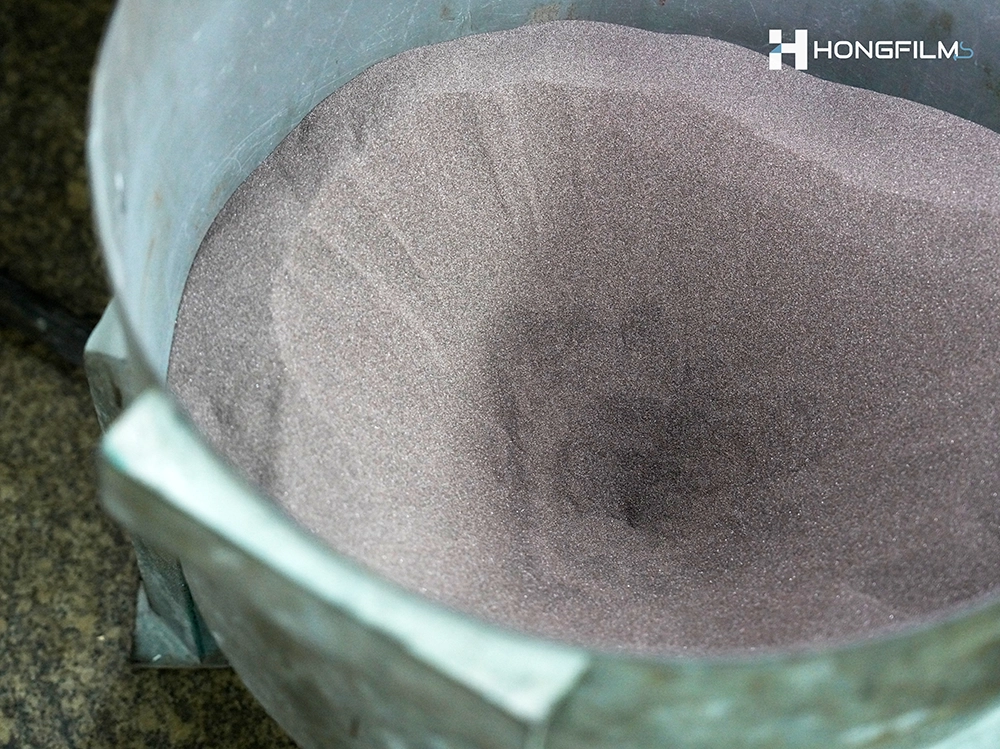
As shown in the photo, before sandblasting begins, the surrounding parts of the machine are carefully covered with protective covering to prevent abrasive particles and dust from entering the bearings or other precision components.
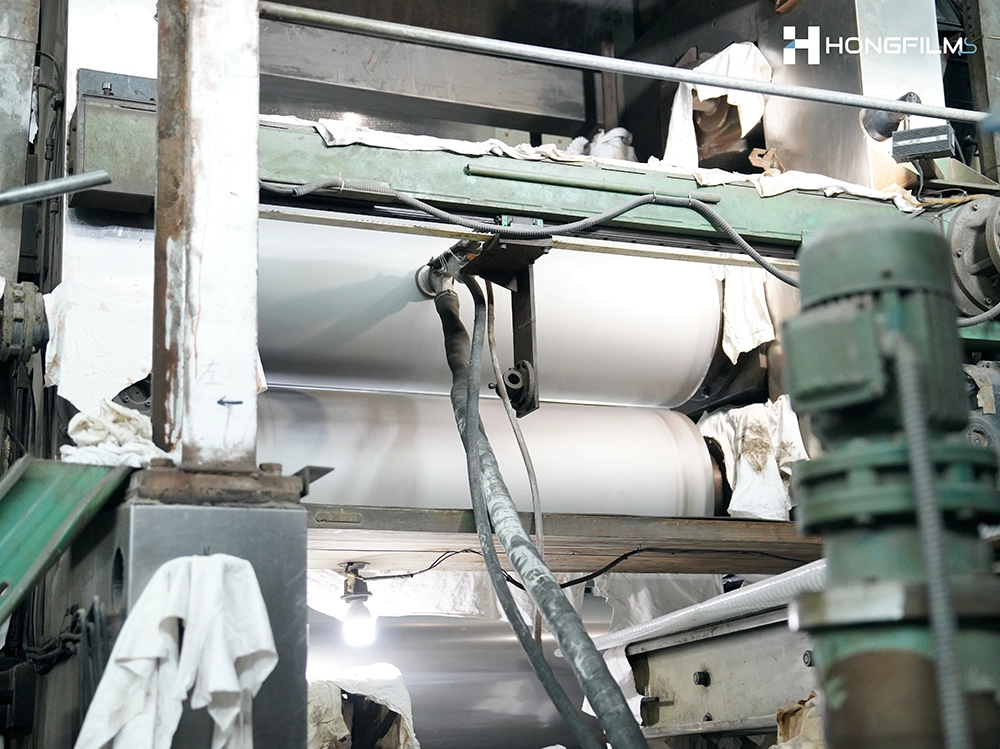
By adjusting the abrasive particle size and the resulting roller roughness, different surface effects can be achieved, including fine, medium, or coarse textured finishes, as well as various levels of matte appearance.
During the PVC calendering process, this controlled roller texture is transferred onto the sheet surface, creating a matte, finely textured, or frosted finish.
The purpose of sandblasting is not simply to make the sheet “rougher,” but to achieve a stable, uniform, and repeatable surface microstructure.
Together with other factors such as material formulation and corona treatment, appropriate surface roughness can provide a more consistent foundation for ink, coatings, or adhesive application, while also supporting more stable sheet feeding during printing.
How Do We Manage Roller Condition?
HongFilms’ equipment management system typically includes three levels:
Routine Inspections
Before and during production, our technicians check roller cleanliness, surface condition, operating temperature, pressure, vibration, and the sheet surface for any visible abnormalities.
Preventive Maintenance
Cleaning, adjustment, inspection, servicing, and other maintenance work are scheduled based on equipment operating hours, production records, and the actual condition of the roller surface.
Condition-Based Maintenance
When changes in roller surface roughness, localized wear, or any other condition requiring attention are detected, appropriate corrective action is taken promptly.
How Does This Benefit Card Manufacturers?
For card manufacturers, raw material consistency is critical. PVC Card Core Sheet undergo multiple downstream processes, including printing, sheet stacking and collation, hot lamination, card punching, and personalization.
Even slight variations in the surface condition of the raw material may require additional machine adjustments and can result in material waste, lower production efficiency, or higher rejection rates during mass production.
A well-maintained roller surface helps support:
- Uniform surface finish and roughness;
- Stable sheet thickness and appearance;
- More predictable printing performance;
- Fewer recurring surface defects;
- Improved batch-to-batch consistency and downstream processing reliability.
- Consistent material quality begins with controlled equipment conditions.
By maintaining the roller surface before minor changes become larger production issues, we aim to support more stable PVC Card Core Sheet performance for our customers’ printing, lamination, and card-manufacturing processes.
For technical discussions about PVC Card Core Sheet specifications or surface requirements, feel free to connect with the HongFilms team.